Hydrant systems give firefighters reliable access to large volumes of water. Here is how they work and what determines their design.
A fire hydrant system provides firefighting water at designated points in and around a building or site. It is designed for use by the fire service and trained responders, who connect hoses to fight a fire that has grown beyond first-aid firefighting.
Types of hydrant
- External (yard) hydrants — pillar or underground hydrants around a site, often used at industrial facilities, warehouses and large developments.
- Internal hydrants / landing valves — outlets on each floor of a building, usually in stair enclosures, connected to a riser.
- Wet risers — permanently charged with water.
- Dry risers — empty until the fire service pumps water in through an inlet at ground level.
Main components
- Water source: mains connection and/or dedicated storage tank
- Fire pump set: duty, standby and jockey pumps where required
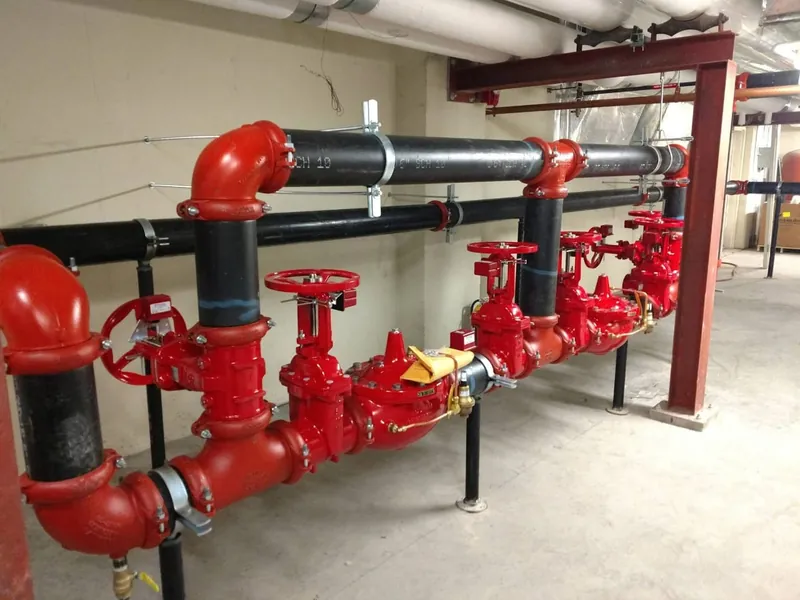
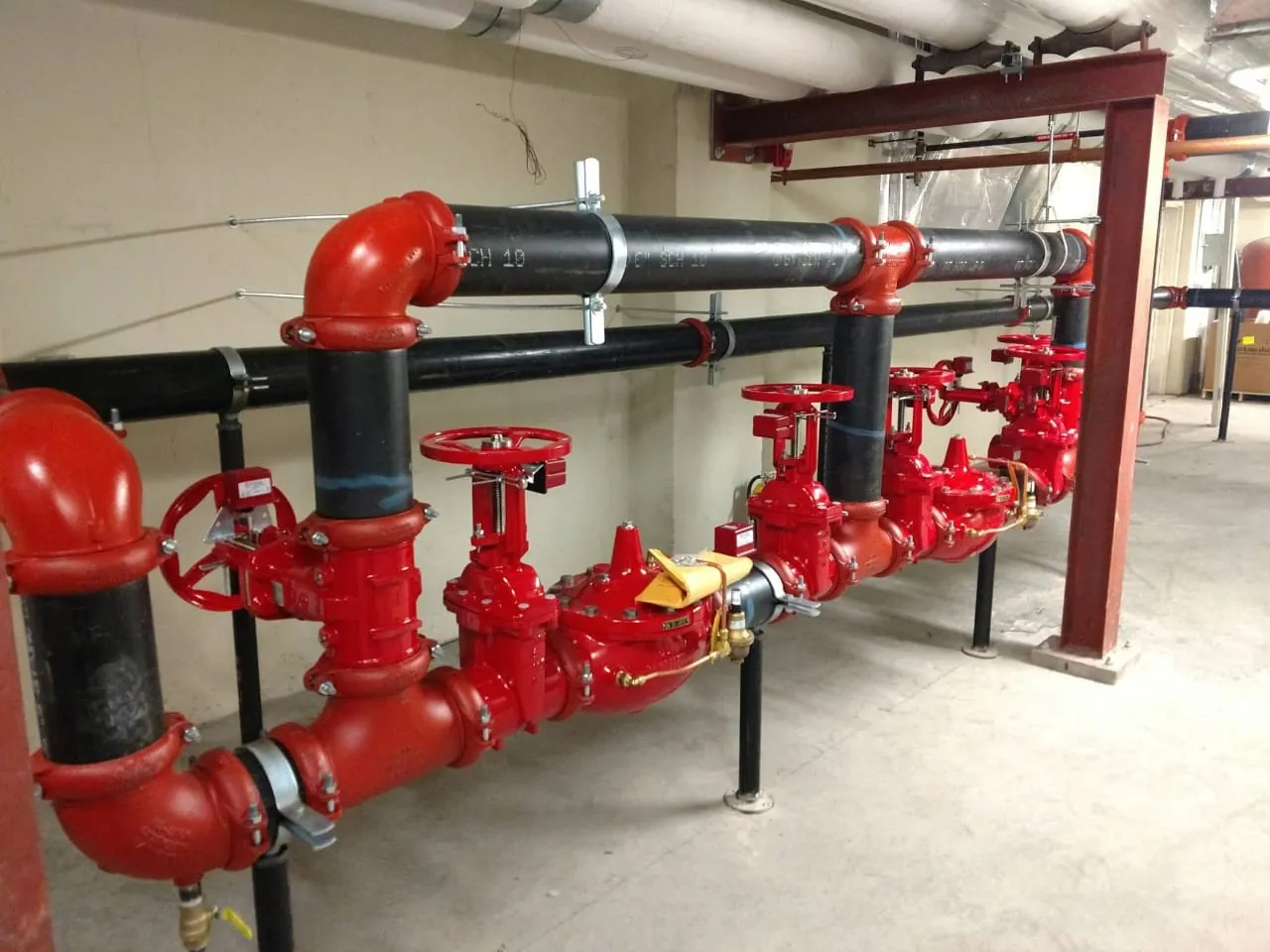
- Ring main or distribution pipework
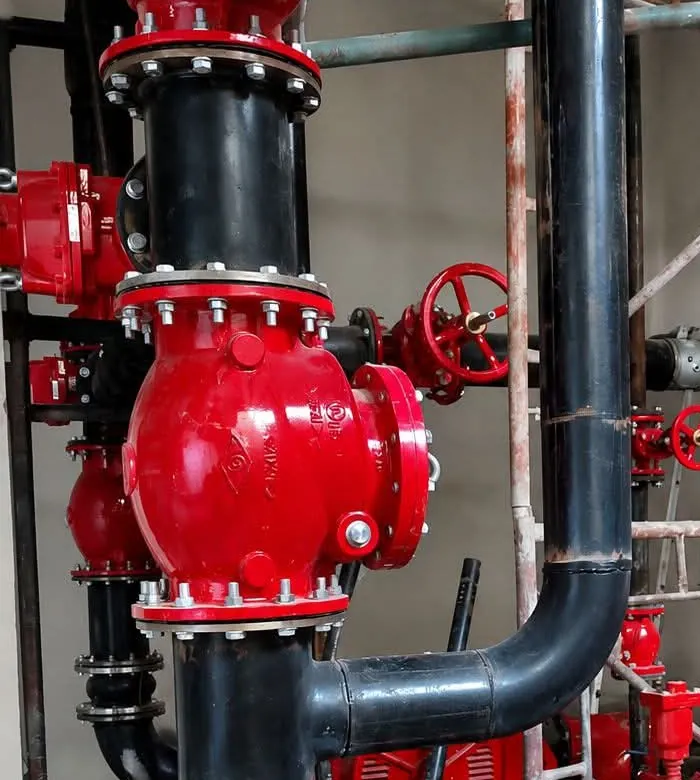
- Isolation valves to allow sections to be maintained
- Hydrant valves, landing valves and outlets
- Hoses, branch pipes and cabinets where specified
Design considerations
Hydrant design considers:
- Coverage — every part of the building or site must be reachable with hose from a hydrant
- Access — firefighters and vehicles need to reach hydrants safely
- Flow and pressure — the system must deliver the required water at the outlets
- Duration — storage must sustain the required flow for the design period
- Reliability — redundancy in pumps and supply, and protection from damage
Hydrants vs hose reels
Hose reels are for first response by trained occupants and use smaller hose. Hydrants deliver much higher flows and are used by the fire service or trained teams. Many buildings have both.
Maintenance
Hydrant systems need regular inspection: valves checked for operation and leaks, outlets accessible and undamaged, pumps run and tested, and flow tests carried out at suitable intervals.
To discuss hydrant protection for your site, request a quote.
Related services
Related industries