Why Every Hotel in Zanzibar Needs a Reliable Fire Protection System
Sleeping guests, busy kitchens, generators and thatched roofs make hotels one of the most demanding environments for fire safety. Here is what a reliable system looks like.
Water-based and special hazard systems selected according to the building’s layout, occupancy, fire risks, water supply and applicable requirements — supplied, installed, tested and maintained within an agreed scope.
Firefighting systems give occupants and the fire service the means to control or suppress a fire. The right arrangement depends on how a building is used, what is stored or processed inside it, how much water is available and which requirements apply to the project.
Omega supports clients from system selection and coordination through supply, installation, testing and long-term maintenance. Every installation is planned around the actual site rather than a generic template, and final design calculations, equipment specifications and installation details are confirmed against project requirements and applicable approvals.

Hydrant installations provide designated points from which firefighting water can be accessed. Planning considers coverage, access for responders, water availability, equipment selection and the building layout.
Fixed or portable monitors deliver large volumes of water or foam and may suit larger or specialised facilities such as fuel storage, industrial yards or loading areas.
Hose reels give trained occupants a first-response option for early-stage fires. Locations are planned for reach, visibility and unobstructed access.
Sprinklers respond to heat from a developing fire and discharge water over the affected area. Design considers occupancy and hazard classification, water supply, hydraulic demand, head selection, spacing and ceiling coordination.
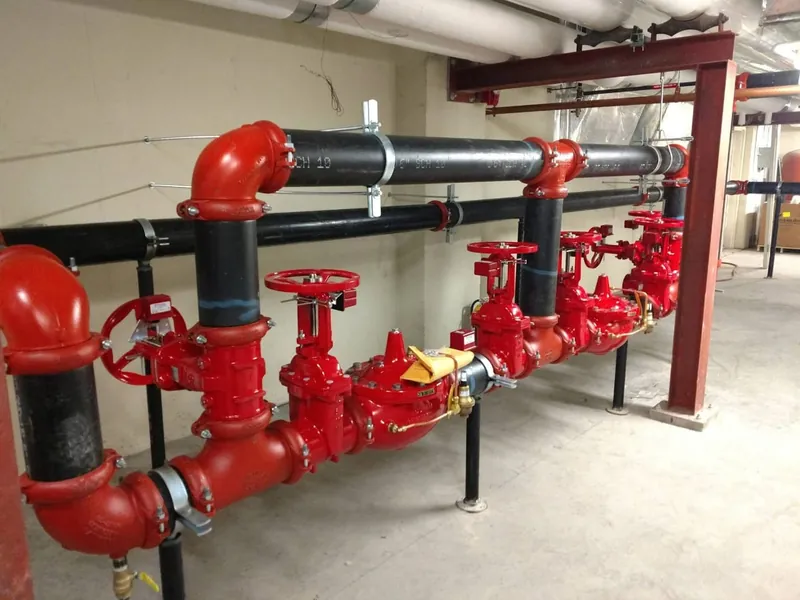
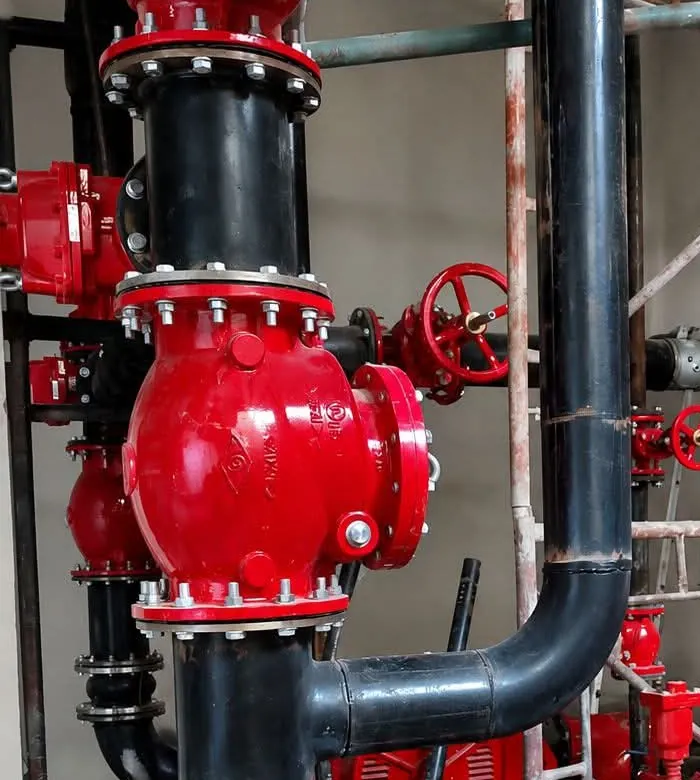
Where a dedicated fire water supply is required, pumps are matched to system demand and design criteria — including electric, diesel and jockey pumps with their controllers.
Storage is sized to the system’s design duration and demand, with suction arrangements, valves, level monitoring and refill provisions coordinated with the pump set.
Some rooms or assets need specialised protection instead of, or in addition to, water — such as FM-200, CO₂ or other clean-agent systems where suitable and permitted. Selection requires careful assessment of the hazard, occupancy, enclosure integrity and safety considerations.
Systems reflect occupancy, layout, hazards and water supply instead of a one-size-fits-all specification.
Interfaces with alarms, power, building management systems, civil works and fire service access are identified early.
Flow, pressure and functional tests are carried out within the agreed scope, with results recorded.
Preventive maintenance and inspections help keep pumps, valves and sprinklers ready for service.
Smoke, heat and flame detection, control panels, manual call points, sounders and beacons — conventional or addressable.
View serviceFunctional, flow, pressure and interface testing, preventive maintenance, inspection reporting, repairs and upgrades.
View serviceFire risk assessment support, system design and drawings, technical inspections and authority submission support.
View service
Sleeping guests, busy kitchens, generators and thatched roofs make hotels one of the most demanding environments for fire safety. Here is what a reliable system looks like.
Sprinklers operate individually, close to the fire, while it is still small. Here is how they work and what goes into designing a system.
Hydrant systems give firefighters reliable access to large volumes of water. Here is how they work and what determines their design.
Tell us about your building and what you need. We will review it and recommend a practical way forward.