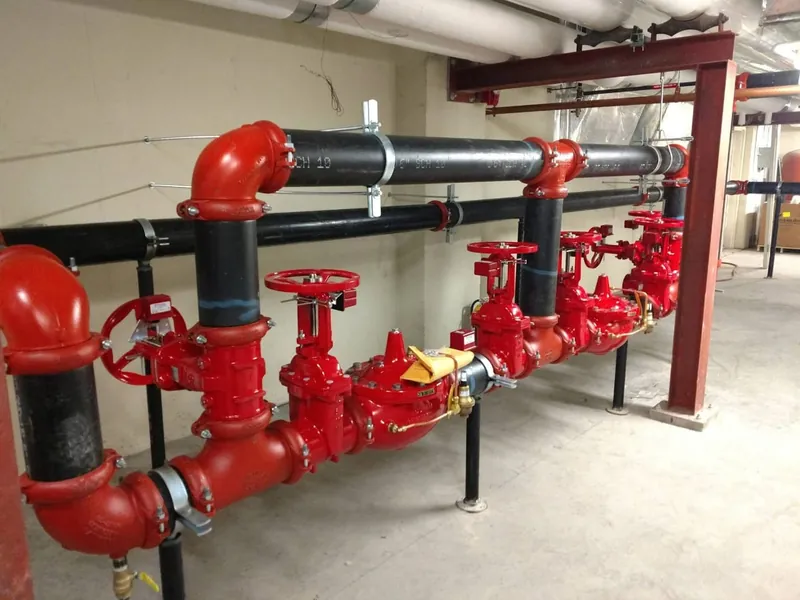
Fire Protection Systems
How Automatic Sprinkler Systems Protect Commercial Buildings
Sprinklers operate individually, close to the fire, while it is still small. Here is how they work and what goes into designing a system.
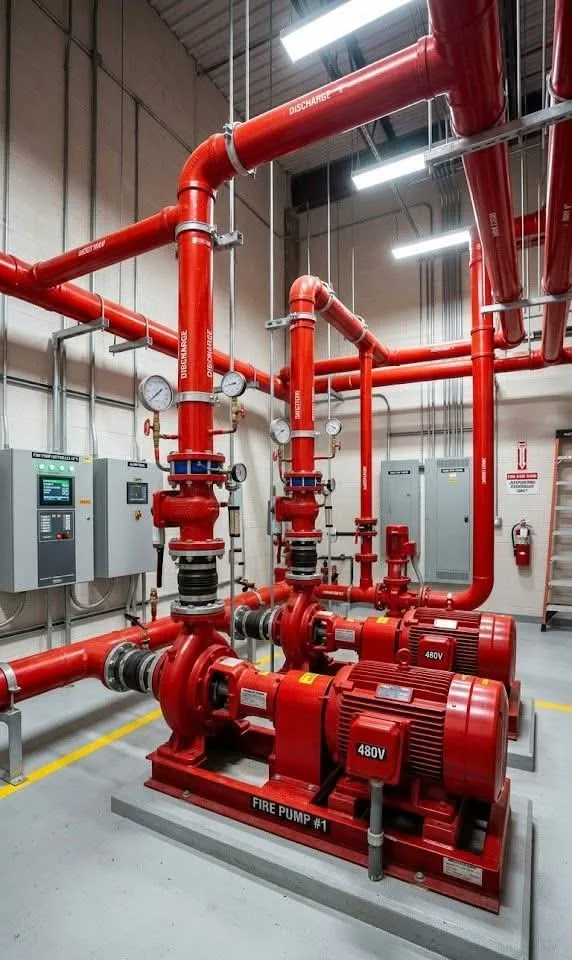
Machinery, electrical equipment, storage, processes and materials that shape fire risk.
Industrial and operational facilities vary widely — from warehouses and workshops to processing plants and utilities. Fire risk is shaped by the materials stored, the processes carried out and the equipment in use, so protection must be based on site-specific assessment.
Risks and requirements vary by facility. A site-specific assessment confirms what applies to your building.
Hydrants, fire monitors, hose reels, automatic sprinklers, fire pumps, water storage and special hazard suppression.
View serviceSmoke, heat and flame detection, control panels, manual call points, sounders and beacons — conventional or addressable.
View servicePortable fire extinguishers, fire blankets, hose cabinets and accessories, selected for the hazards present.
View serviceFunctional, flow, pressure and interface testing, preventive maintenance, inspection reporting, repairs and upgrades.
View serviceFire risk assessment support, system design and drawings, technical inspections and authority submission support.
View serviceOmega can support industrial clients with hydrant and monitor systems, fire pumps and water storage, sprinklers, flame and heat detection, special hazard suppression and planned maintenance.
Request a site assessment
Sprinklers operate individually, close to the fire, while it is still small. Here is how they work and what goes into designing a system.
Hydrant systems give firefighters reliable access to large volumes of water. Here is how they work and what determines their design.
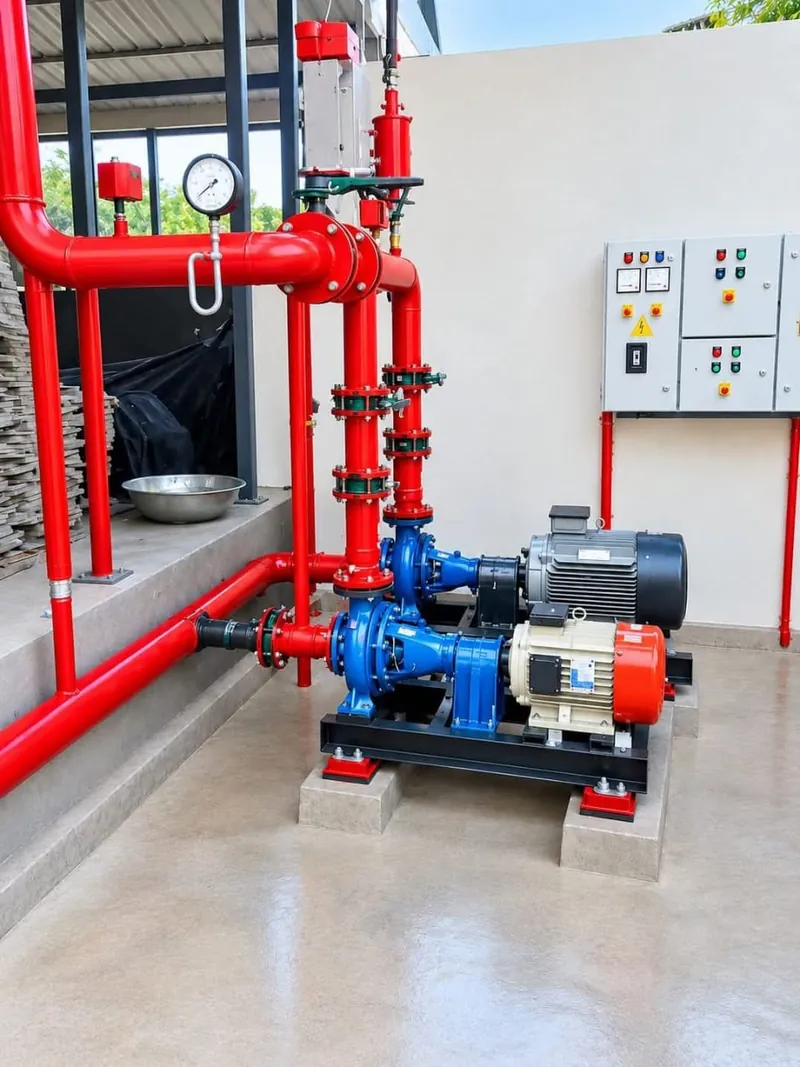
A fire pump may sit idle for years, then must start instantly and run at full duty. Regular testing is the only way to know it will.
Tell us about your building and what you need. We will review it and recommend a practical way forward.