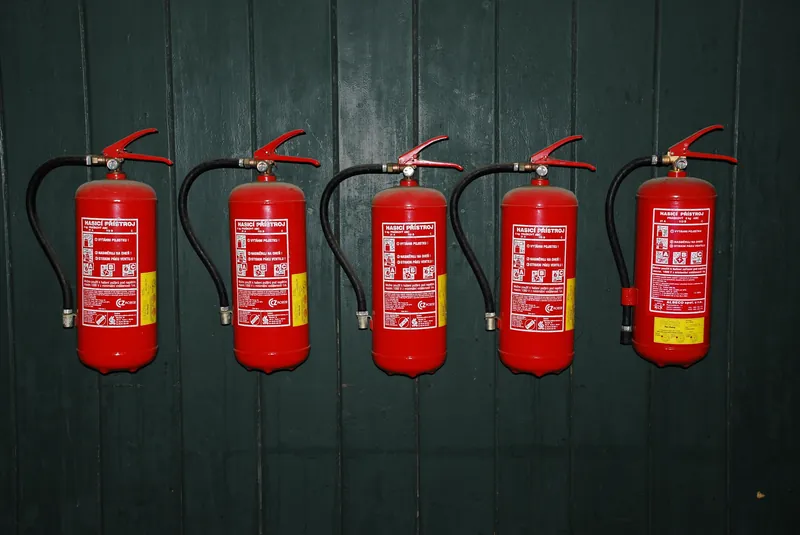
Fire Extinguishers
Types of Fire Extinguishers and Their Applications
Using the wrong extinguisher can make a fire worse. This guide explains the main extinguisher types, the fires they are designed for and where each is typically used.
Portable and ancillary equipment that supports first response and the operation of installed systems — selected for the hazards present, installed in accessible locations and inspected at suitable intervals.
Portable equipment gives trained occupants the means to deal with a small fire before it spreads. To be useful, the equipment must suit the type of fire likely to occur, be easy to find and reach, and be in working condition when needed.
Omega supplies and installs fire safety equipment with mounting, identification and handover information, and can include it in a periodic inspection programme.
Extinguisher types suited to the classes of fire that may occur — water, foam, dry powder, CO₂ and wet chemical — with mounting, identification and handover information.
For specific small-fire or clothing-fire scenarios where appropriate, such as kitchens, with placement, accessibility, user awareness and replacement planned.
Cabinets that protect and organise firefighting equipment, matched to the installed system and specification.
Hoses selected for the system they serve, with couplings compatible with the installed valves and connections.
Branch pipes, nozzles, valves and connection fittings that complete hose and hydrant installations.
Brackets, stands and signs that keep equipment secure, visible and easy to locate in an emergency.
| Extinguisher type | Typical application |
|---|---|
| Water | Class A — solid combustibles such as wood, paper and textiles |
| Foam | Class A and Class B — solids and flammable liquids |
| Dry powder (ABC) | Classes A, B and C — solids, flammable liquids and gases |
| Carbon dioxide (CO₂) | Class B and electrical equipment hazards |
| Wet chemical | Class F — cooking oils and fats in commercial kitchens |
Colour coding and classifications vary by standard; final selection is confirmed by site assessment and applicable requirements. Users should receive suitable instruction and attempt firefighting only when it is safe to do so.
Extinguisher types are matched to the classes of fire that may occur in each area.
Placement and signage are planned so equipment is visible and accessible.
Periodic inspection helps confirm that equipment is charged, undamaged and in place.
Equipment schedules and locations are documented for your records.
Functional, flow, pressure and interface testing, preventive maintenance, inspection reporting, repairs and upgrades.
View serviceHydrants, fire monitors, hose reels, automatic sprinklers, fire pumps, water storage and special hazard suppression.
View serviceFire risk assessment support, system design and drawings, technical inspections and authority submission support.
View service
Using the wrong extinguisher can make a fire worse. This guide explains the main extinguisher types, the fires they are designed for and where each is typically used.
An extinguisher that has lost pressure or been moved is no help in an emergency. Simple monthly checks and periodic servicing keep equipment ready.
Hot oil, gas, grease-laden ducts and busy staff make commercial kitchens a frequent source of fires. Most incidents are preventable.
Tell us about your building and what you need. We will review it and recommend a practical way forward.