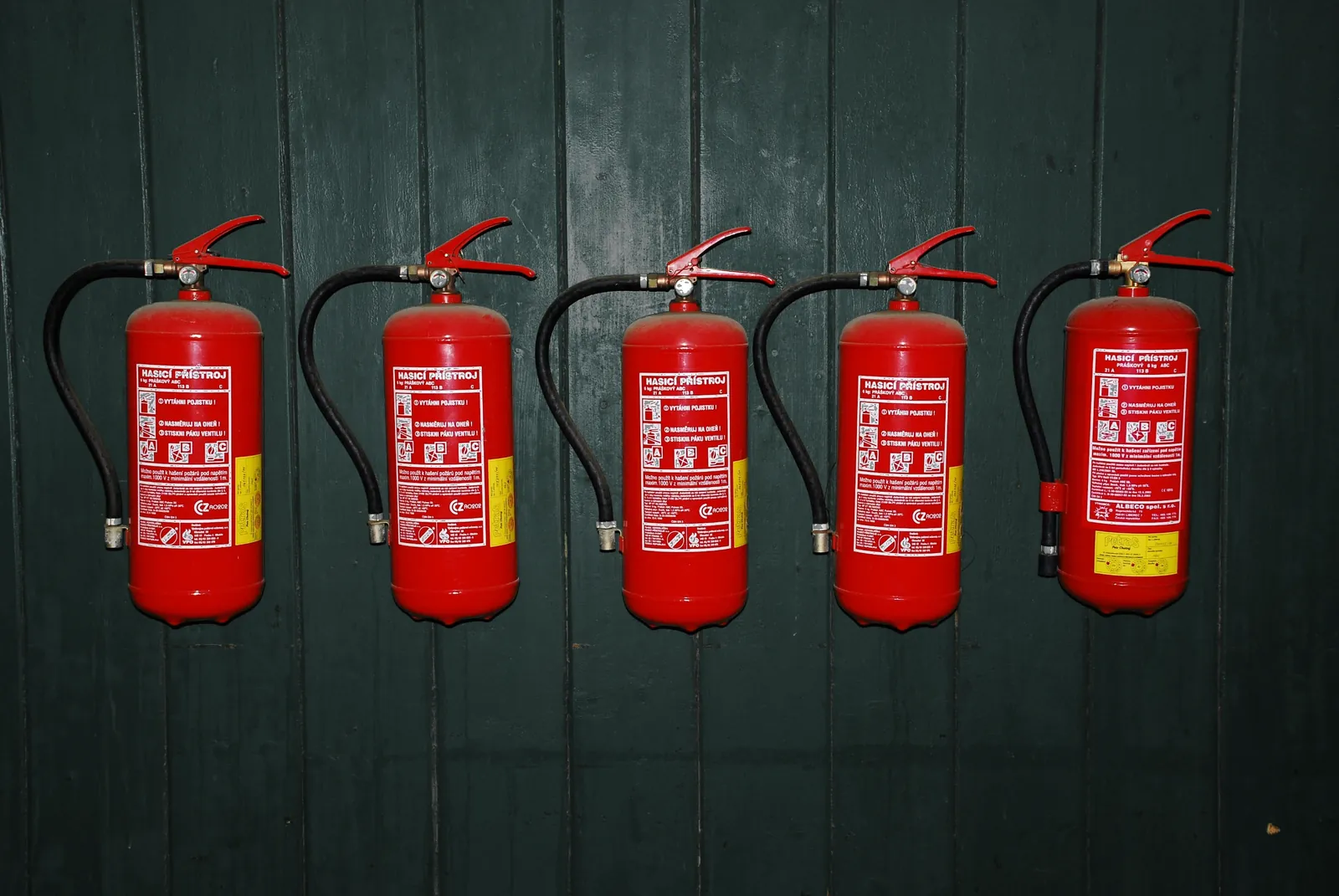
Using the wrong extinguisher can make a fire worse. This guide explains the main extinguisher types, the fires they are designed for and where each is typically used.
Portable fire extinguishers are the most common piece of fire safety equipment — and one of the most misunderstood. Each type is designed for particular classes of fire, and using the wrong one can be ineffective or dangerous.
Classes of fire
Under the European classification commonly used in East Africa (BS EN 2):
| Class | Fuel |
|---|---|
| A | Solid combustibles — wood, paper, textiles, plastics |
| B | Flammable liquids — petrol, diesel, paints, solvents |
| C | Flammable gases — LPG, natural gas |
| D | Combustible metals |
| F | Cooking oils and fats |
Electrical equipment is not a class in this system, but it is a hazard that affects extinguisher choice.
Main extinguisher types
Water
For: Class A fires. Water cools burning material. It must not be used on electrical equipment or burning oil. Typical locations: offices, corridors, hotel rooms, schools.
Foam
For: Class A and Class B fires. Foam forms a blanket over burning liquids and cools solids. Typical locations: garages, workshops, buildings storing flammable liquids.
Dry powder (ABC)
For: Classes A, B and C. Versatile, but the powder reduces visibility and is messy, and can damage sensitive equipment. Not ideal for confined occupied spaces. Typical locations: vehicles, fuel stores, generator areas, outdoor plant.
Carbon dioxide (CO₂)
For: Class B fires and electrical equipment. CO₂ leaves no residue, making it suitable for server rooms and electrical panels. It provides little cooling, so fires can reignite, and it displaces oxygen in small enclosed spaces. Typical locations: electrical rooms, offices with IT equipment, switchboards.
Wet chemical
For: Class F fires (and often Class A). Designed for deep-fat fryers and cooking oils. It cools the oil and forms a soap-like layer that prevents reignition. Typical locations: commercial kitchens in hotels, restaurants and hospitals.
Colour coding
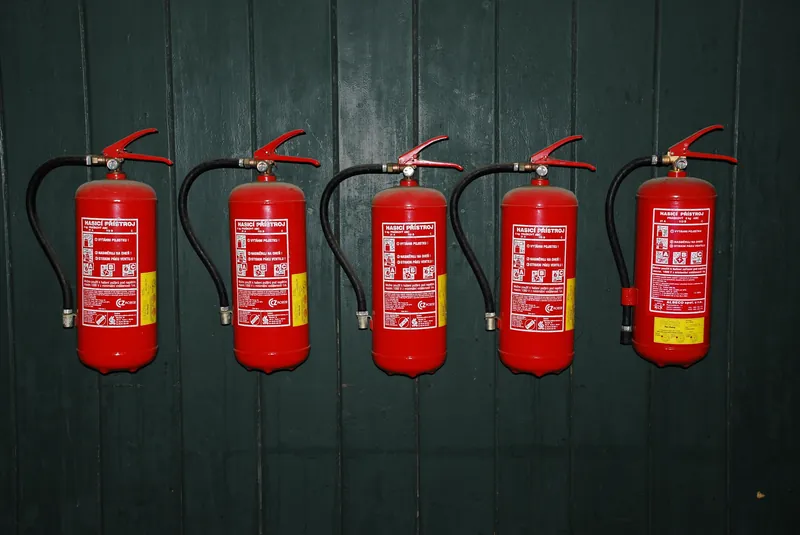
In many countries extinguishers have a red body with a coloured band or label to show the type — for example, cream for foam, blue for powder, black for CO₂ and yellow for wet chemical. Conventions vary by standard and manufacturer, so always read the label.
Placement and readiness
- Mount extinguishers on brackets or stands at visible, accessible points, often near exits and specific hazards.
- Keep them unobstructed and signed.
- Make sure staff receive suitable instruction.
- Arrange regular inspection and servicing.
Important: extinguishers are for small fires only. Always raise the alarm first, and attempt firefighting only when it is safe to do so.
Need help choosing extinguishers for your premises? Request a quote from Omega.
Related services
Related industries