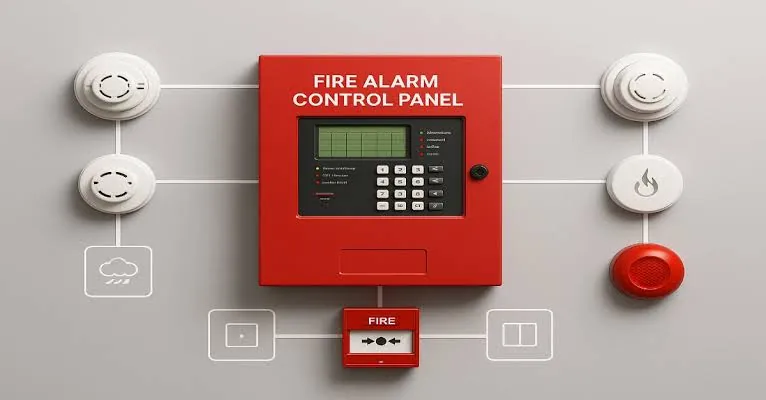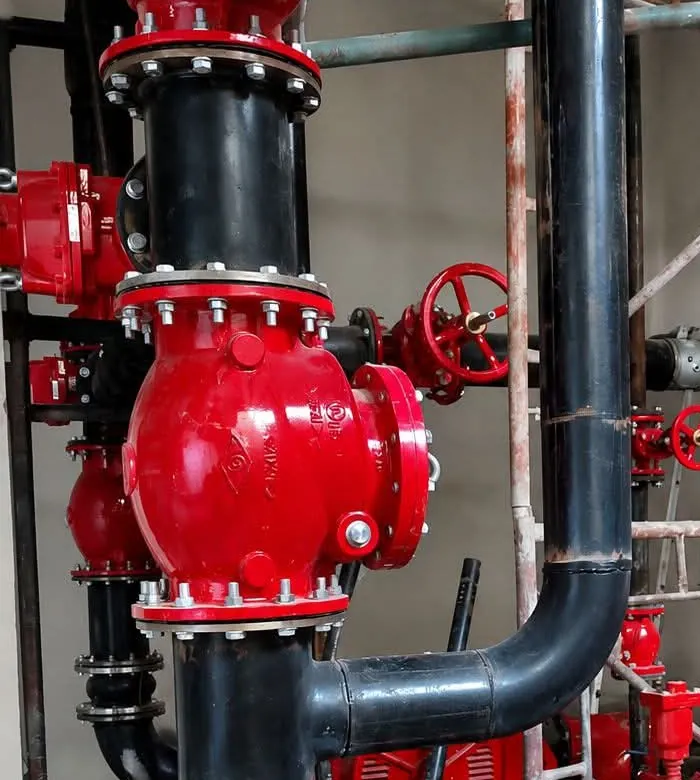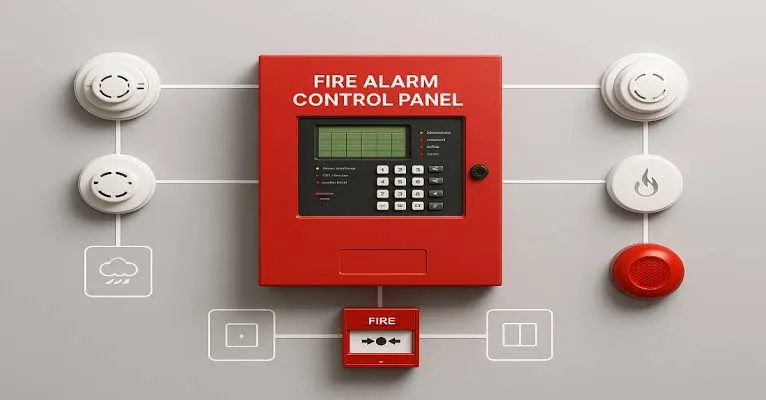
Both systems detect fire and raise the alarm. The difference is how precisely they tell you where the fire is — and that affects response time, cost and maintenance.
When planning a fire alarm system, one of the first decisions is whether it should be conventional or addressable. Both detect fire and sound the alarm. The difference lies in how much information the control panel receives.
How a conventional system works
In a conventional system, detectors and call points are wired in groups called zones. Each zone is connected to the control panel on its own circuit. When a device operates, the panel shows which zone is in alarm — for example, "Zone 3: First floor east wing" — but not which device.
Advantages
- Lower equipment cost
- Simple to understand and operate
- Well suited to small buildings with simple layouts
Limitations
- Staff must search the zone to find the device that operated
- Fault-finding takes longer
- Less flexible for large or complex buildings
How an addressable system works
In an addressable system, every device has its own address and communicates individually with the panel, usually on a loop. When a device operates, the panel shows exactly which one — for example, "Device 042: Smoke detector, Room 214".
Advantages
- Pinpoints the exact device in alarm or fault
- Faster response and investigation
- Programmable cause-and-effect for doors, lifts, ventilation and suppression
- Loop wiring can reduce cabling in larger buildings
Limitations
- Higher initial equipment cost
- Programming and commissioning require more expertise
Which one should you choose?
There is no single right answer. Consider:
- Building size and layout. Larger or multi-storey buildings usually benefit from addressable systems.
- Occupancy. Hotels and hospitals, where every minute matters, often justify addressable systems.
- Integration needs. If the alarm must control lifts, doors or ventilation, addressable systems make this easier.
- Budget and expansion. Think about lifetime cost and future extensions, not just the initial price.
- Project specification. The design basis and applicable requirements may set expectations.
The bottom line
Conventional systems remain a sensible choice for smaller, simpler premises. Addressable systems offer faster response and better control in larger or more complex buildings. A site assessment helps decide which approach suits your building — talk to Omega about your project.
Related services
Related industries