Sprinklers operate individually, close to the fire, while it is still small. Here is how they work and what goes into designing a system.
Automatic sprinkler systems are among the most effective tools for controlling fires in buildings. They work automatically, around the clock, whether or not anyone is present.
How sprinklers work
A sprinkler system is a network of pipes filled with water under pressure, with sprinkler heads at intervals across the ceiling. Each head is held closed by a heat-sensitive element — usually a glass bulb containing liquid, or a fusible link.
When a fire heats the air at ceiling level, the element in the nearest head reaches its operating temperature. The bulb breaks, the head opens and water sprays over the area below.
Only the heads exposed to enough heat operate. A common misconception from films is that every sprinkler in a building goes off at once. In a typical wet-pipe system, most fires are controlled by a small number of heads near the fire.
Main components
- Water supply — from the mains, a storage tank, or both
- Fire pumps — where the supply alone cannot provide the required pressure and flow
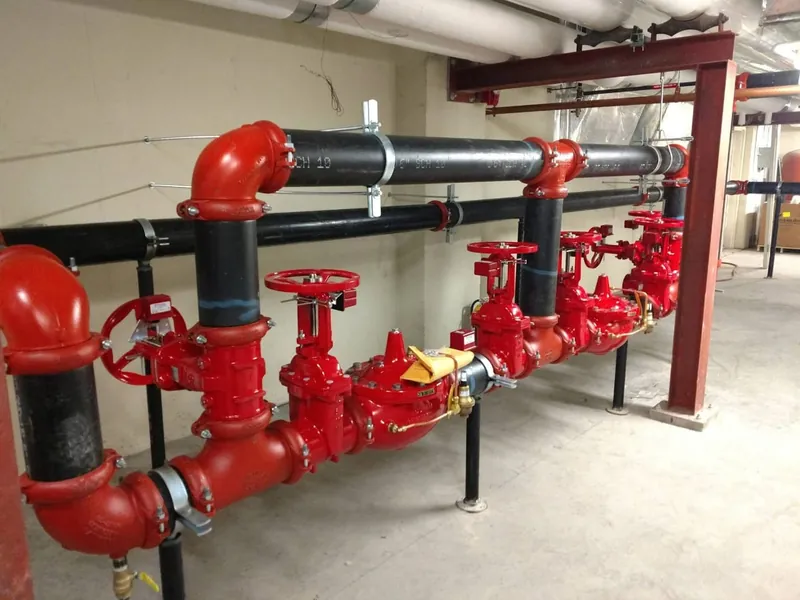
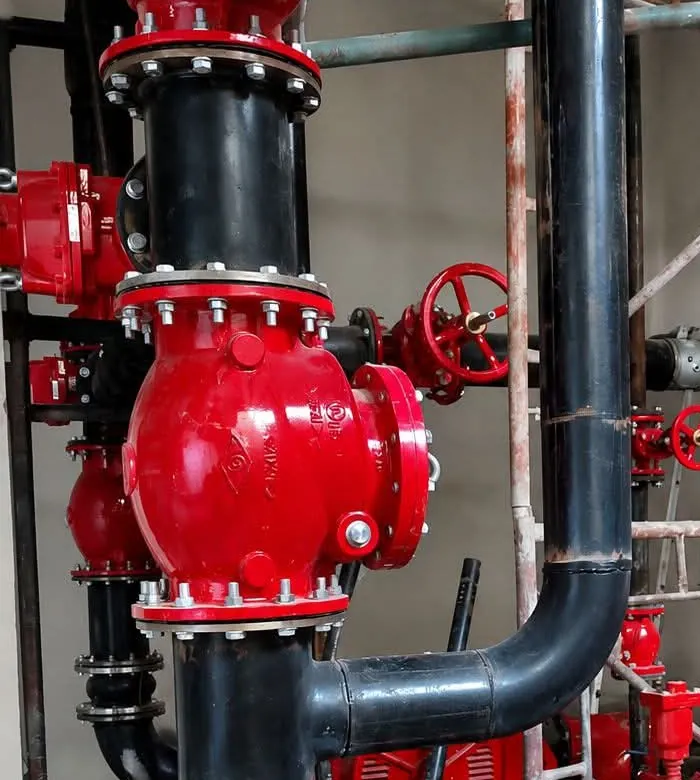
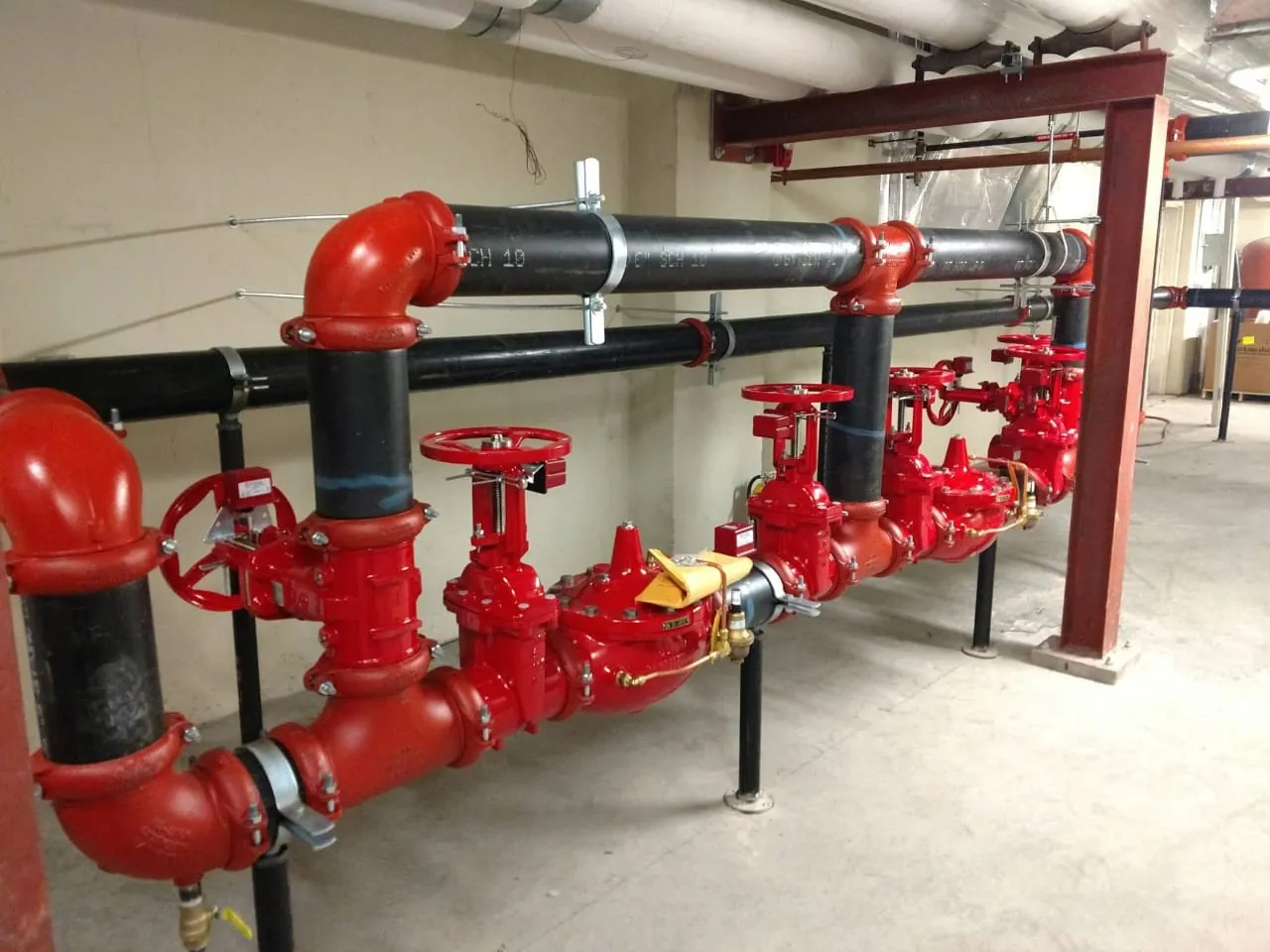
- Alarm and control valves — which control the system and raise an alarm when water flows
- Pipework — risers, mains and branch lines
- Sprinkler heads — selected for temperature rating, spray pattern and response
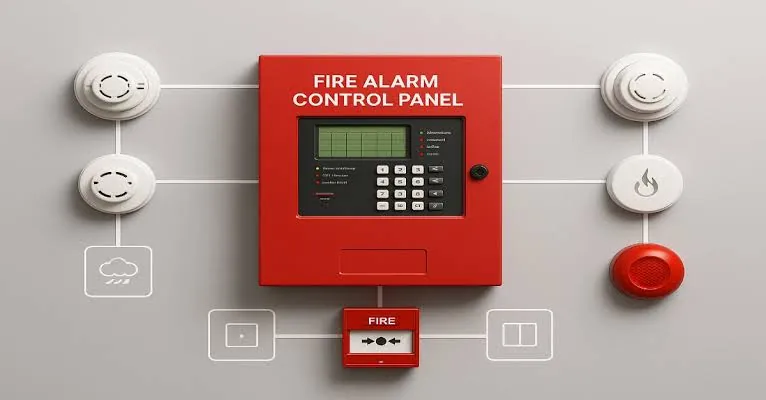
- Flow switches — which signal the fire alarm panel
Types of system
- Wet pipe — pipes always full of water; the most common type
- Dry pipe — pipes filled with air; used where water could freeze (rare in Zanzibar’s climate)
- Pre-action — require detection before water enters the pipes; used where accidental discharge would be costly
- Deluge — all heads open, released by a detection system; used for specific high hazards
What goes into design
Sprinkler design considers:
- Occupancy and hazard classification
- Ceiling heights and obstructions
- Storage heights and arrangements
- Hydraulic demand and water supply
- Head type, spacing and coverage
- Coordination with lights, ducts and other services
Design is carried out to a recognised standard and the project’s requirements.
Maintenance matters
A sprinkler system is only effective if valves are open, water supplies are available and pumps start when needed. Regular inspection and testing are essential.
To discuss sprinkler protection for your building, request a consultation with Omega.
Related services
Related industries