From alarms to extinguishers to emergency lighting — a practical checklist of the fire safety equipment most office buildings need.
Offices may seem low-risk, but they contain plenty of fuel — paper, furniture, electronics — and many ignition sources. The right equipment, properly maintained, protects staff and keeps the business running.
The essentials
1. Fire detection and alarm
- Smoke detectors in offices, corridors and meeting rooms
- Heat detectors in kitchenettes where appropriate
- Manual call points near exits and on escape routes
- Sounders audible throughout the building
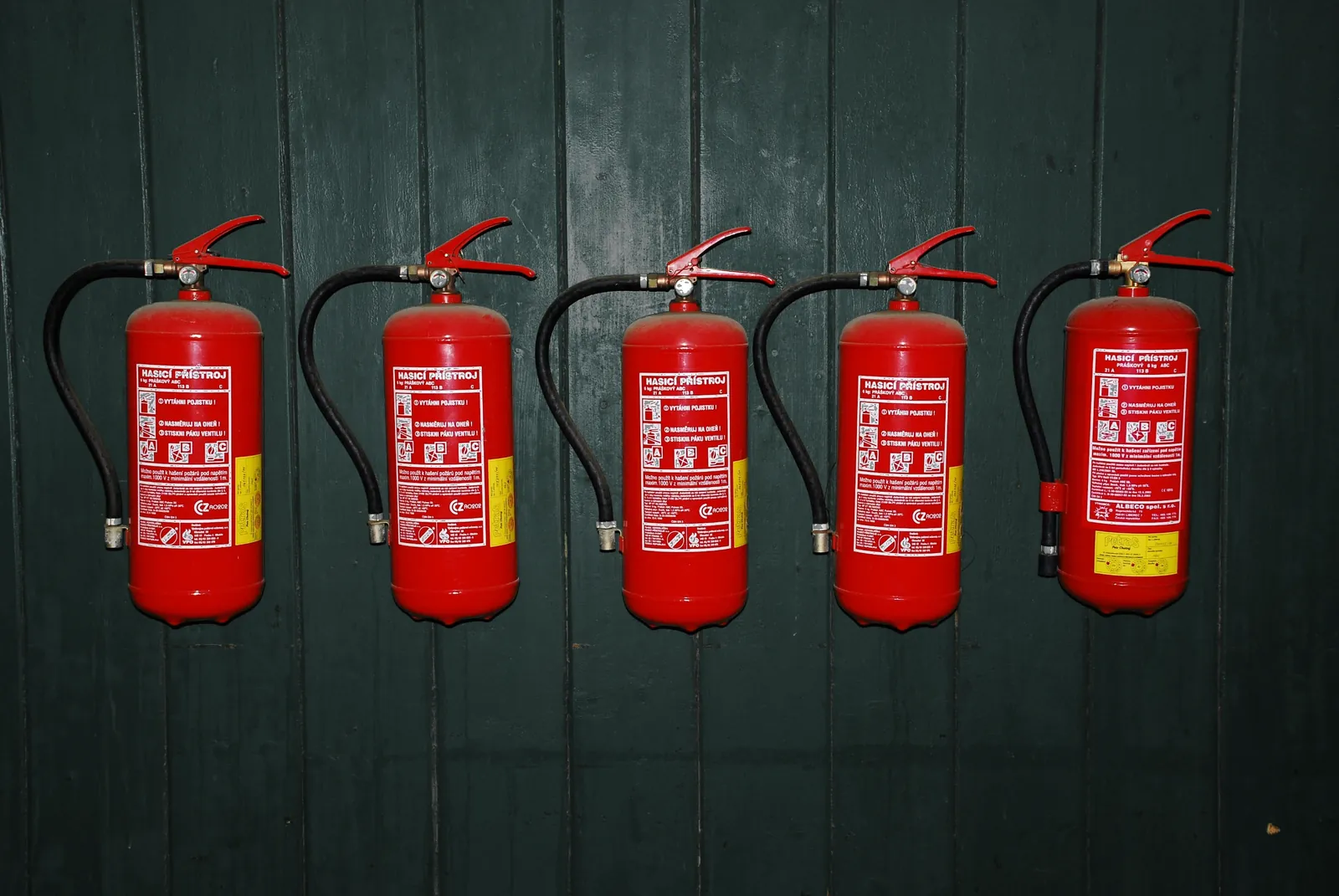
2. Portable fire extinguishers
- Water or foam for general office areas (Class A)
- CO₂ near electrical panels, server rooms and areas with IT equipment
- Located near exits and specific hazards, mounted and signed
3. Fire blankets
In staff kitchens, for small pan fires and clothing fires.
4. Emergency lighting
To light escape routes if mains power fails.
5. Exit signage
Clear, illuminated signs showing the way out.
6. Fire doors
Self-closing fire doors protecting stairs and corridors — never wedged open.
7. Hose reels or hydrants
Depending on the building’s size and design.
8. Special hazard protection
Server rooms holding critical data may justify clean-agent suppression.
Keeping equipment ready
- Visual checks of extinguishers, typically monthly
- Periodic professional servicing
- Regular fire alarm tests
- Emergency lighting tests
- Records of all inspections and tests
People matter too
Equipment works best when people know how to use it:
- Appoint and train fire wardens
- Hold regular evacuation drills
- Make sure everyone knows the assembly point
- Keep escape routes clear
Omega supplies, installs and maintains fire safety equipment for offices in Zanzibar and Tanzania. Request a quote.
Related services
Related industries