There is no single best fire protection system. The right combination depends on your building, its occupants and its risks. Here is how to approach the decision.
Building owners and developers often ask which fire protection system they should install. The answer is rarely a single system — it is usually a combination, chosen for the building and its use.
Start with the questions
Who uses the building?
Sleeping guests, hospital patients, schoolchildren and office workers have very different needs for warning and escape.
What happens inside?
Cooking, storage, manufacturing, data centres and laboratories each bring specific hazards.
How is it built?
Height, area, construction materials and layout affect how fire and smoke spread and how people escape.
What water is available?
Mains pressure, flow and reliability determine whether storage tanks and pumps are needed.
What requirements apply?
Local requirements, project specifications, insurers and operators may set expectations.
The layers of protection
Most buildings use several layers:
- Prevention — controlling ignition sources and fuel
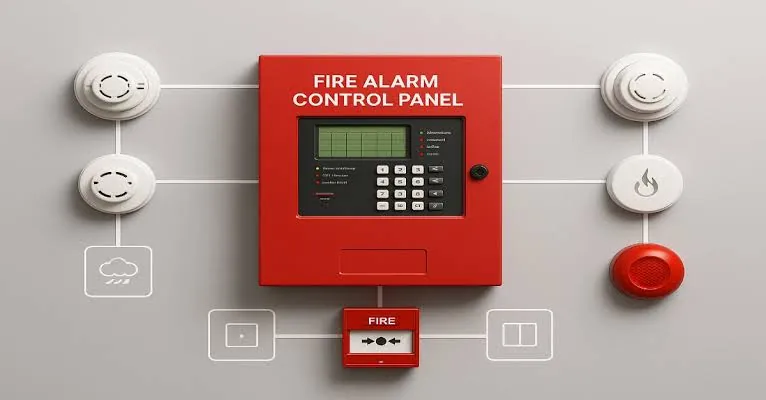
- Detection and warning — smoke, heat or flame detectors, alarms and call points
- Escape — protected routes, fire doors, emergency lighting and signage
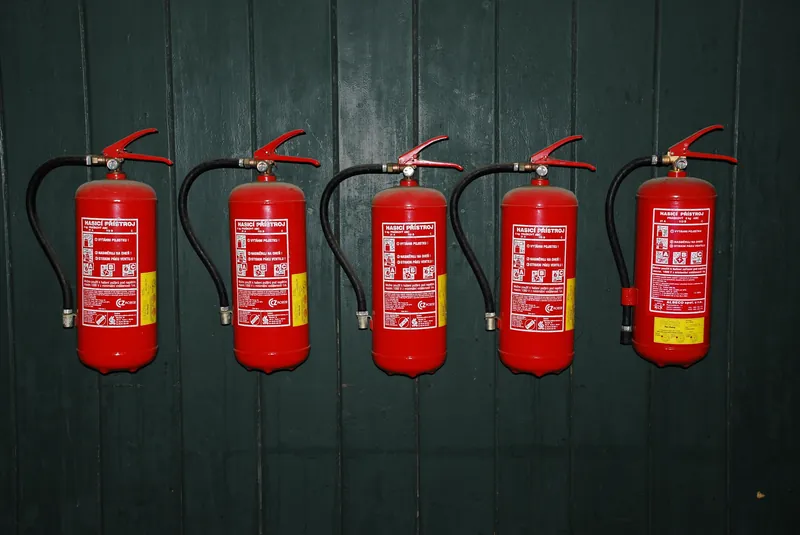
- First response — extinguishers, fire blankets and hose reels
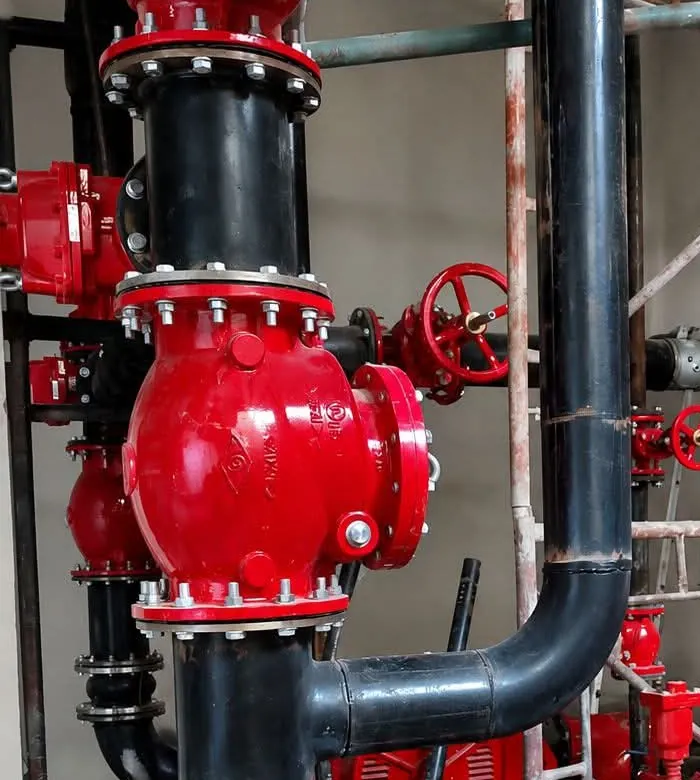
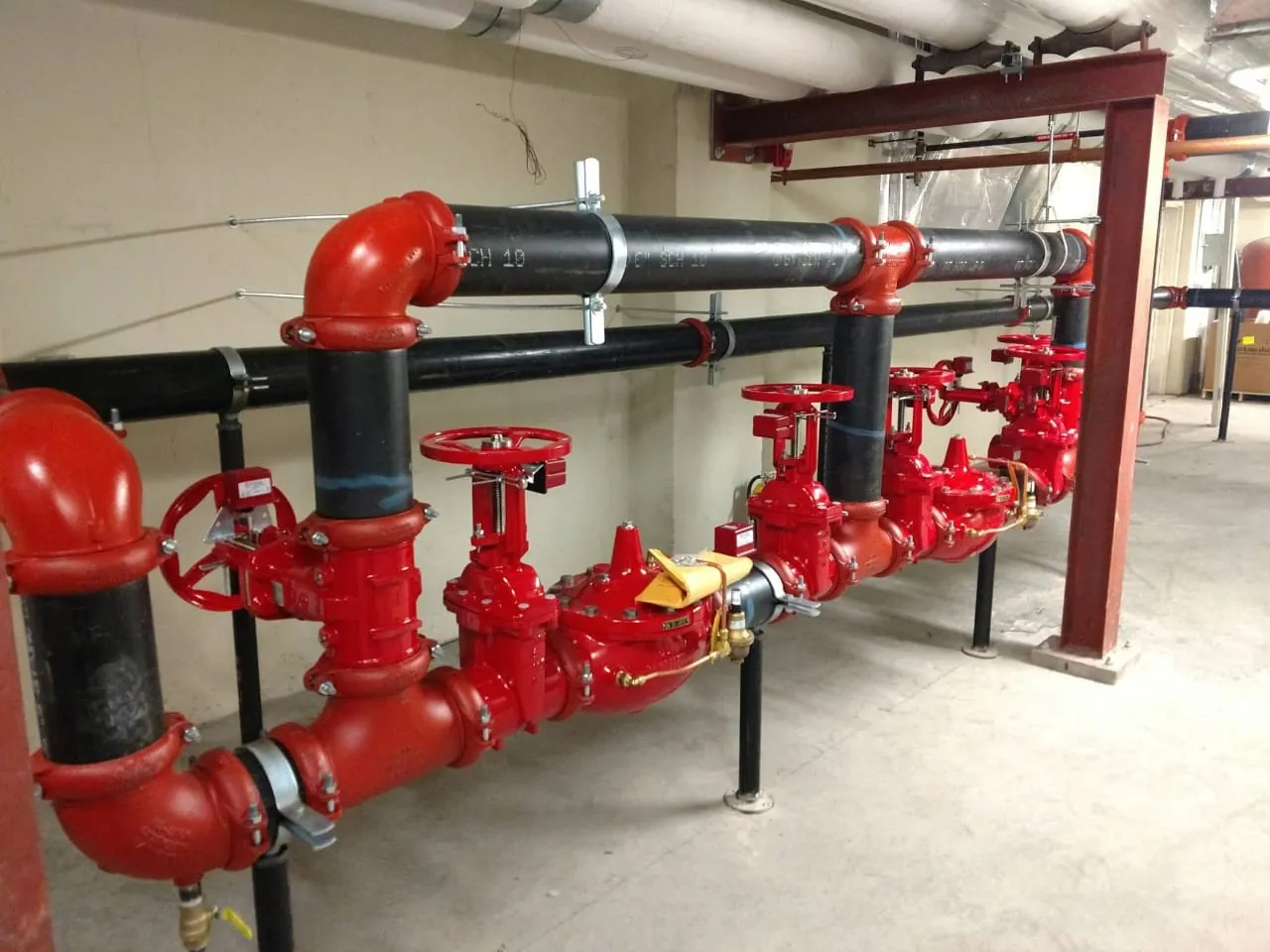
- Automatic suppression — sprinklers, or special systems for specific hazards
- Fire service support — hydrants, risers and access
- Management — maintenance, training and emergency planning
Matching systems to buildings
- Small offices and shops — detection and alarm, extinguishers, emergency lighting
- Hotels and resorts — detection throughout, kitchen protection, hose reels, hydrants, sprinklers where required
- Hospitals — addressable detection, compartmentation, sprinklers and special hazard protection where required
- Warehouses — sprinklers designed for storage, hydrants, pumps and appropriate detection
- Server and electrical rooms — clean-agent or CO₂ systems where suitable
These are general examples only — each building should be assessed individually.
Think long term
Consider the full life of the system: maintenance, spare parts, expansion and future changes of use.
Get advice early
The earlier fire protection is considered, the easier and more economical it is to integrate.
Omega helps clients select, design and deliver the right combination of systems. Request a consultation.
Related services
Related industries